

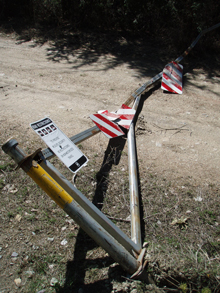
 Road Closure Gates Cannot Effectively Eliminate Trespass
For more than a decade, land and wildlife management agencies have recognized that gates are largely ineffective in stopping motorized use of forest roads to provide wildlife security. In spite of concerted attempts to make gates effectively eliminate trespass by the public, a recent survey of Forest Supervisors in the Northern Continental Divide Grizzly Bear Ecosystem shows continued widespread failure.
For more than a decade, land and wildlife management agencies have recognized that gates are largely ineffective in stopping motorized use of forest roads to provide wildlife security. In spite of concerted attempts to make gates effectively eliminate trespass by the public, a recent survey of Forest Supervisors in the Northern Continental Divide Grizzly Bear Ecosystem shows continued widespread failure.
Information provided by the Forest Supervisors for 1999 and 2000 show that violation and vandalism of gates remain a substantial problem in spite of efforts to monitor and repair them. On the Flathead National Forest, the problem could fairly be described as rampant. The Flathead reported knowledge of 114 road closure violations and 251 instances of damage to public property, the majority being damage to gates. Citations issued for these crimes, however, numbered only 4.
Land and wildlife management agencies are now attempting to reverse policy set in the early 1990s by proposing that gates once again be allowed preference over road obliteration and permanent barriers. While acknowledging the "effectiveness of the proposal will hinge upon the effectiveness of the gates in eliminating trespass by the public," the agencies apparently hope their failure to achieve such effectiveness after more than a decade of concerted effort will go unnoticed.

